

Cart
0
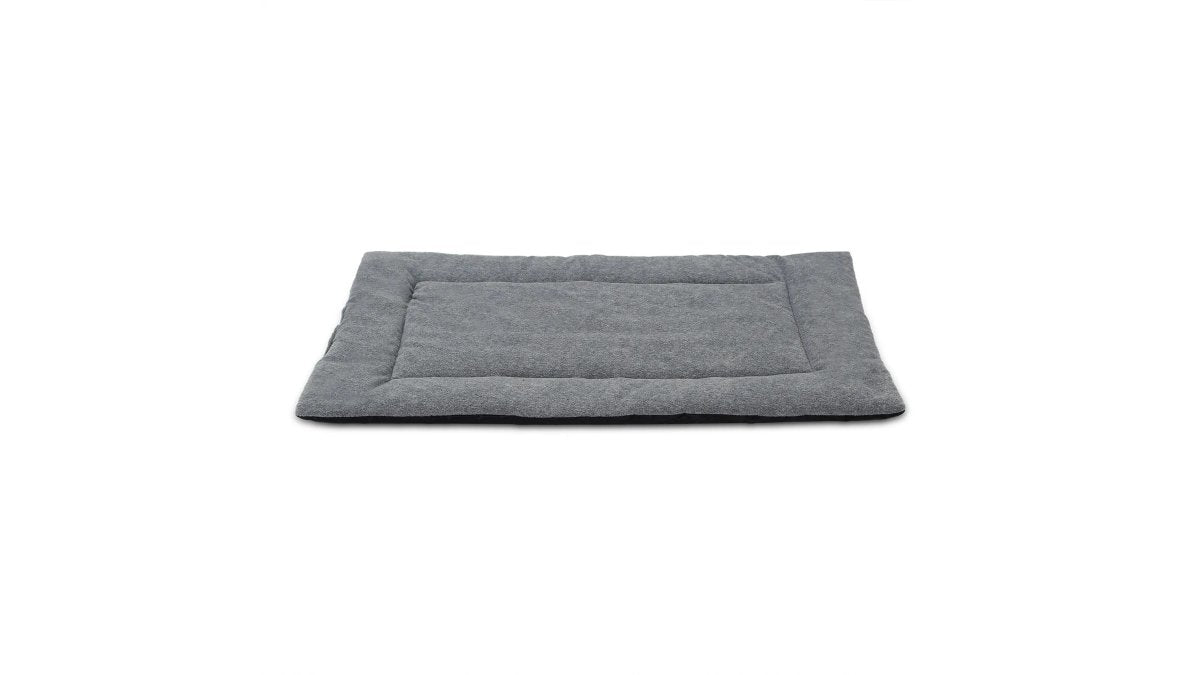
Table of Contents
- What You'll Need to Measure Your Dog
- How to Measure Your Dog's Length and Width
- Dog Bed Size Chart by Weight vs. Dimensions
- Dog Sleeping Positions and Bed Types
- Why Buffer Space Matters for Dog Bed Size
- How to Choose Durable Dog Beds for Chewers
- Special Considerations for Senior Dogs and Small Spaces
- Conclusion
- Frequently Asked Questions
Last Updated: September 20, 2026
What You'll Need to Measure Your Dog
Learning how to measure a dog for the perfect bed size starts with the right tools and a calm, standing dog. The whole process takes about five minutes and only needs a few simple items.
Grab these before you start:
- A soft tape measure (the kind used for sewing works best)
- A helper, if your dog wiggles a lot
- A few treats for a positive reward
- A flat wall or floor space where your dog can stand
A soft tape measure bends around curves, which matters for accuracy. A stiff ruler or yardstick leaves gaps and gives you a number that's too small.
This guide from Red Rock Pet Supplies walks through each step, so you can pick a bed that fits your dog the first time.
If your dog won't hold still, try measuring right after a walk or a meal. Tired dogs stand still longer.
How to Measure Your Dog's Length and Width
Measuring your dog's length and width means capturing two numbers: nose to tail base, and shoulder to shoulder. Both numbers decide the bed size you need.

Step 1: Measure from the tip of the nose to the base of the tail
Have your dog stand in a natural position. Place the end of the tape at the tip of the nose, then run it along the spine to the base of the tail, not the tail tip. Write that number down.
Step 2: Measure your dog's shoulder width
Find the widest point across the shoulders. Run the tape from one shoulder to the other. This tells you how much room your dog needs to lie down without feeling squeezed.
Step 3: Add buffer space
Add 6 to 12 inches to your length measurement. This buffer lets your dog stretch out and turn around.
Pro Tip
Measure your dog while standing, not lying down. A curled-up dog gives you a shorter number that leads to a bed that's too small.
Dog Bed Size Chart by Weight vs. Dimensions
A dog bed size chart by weight gives you a rough starting point, but dimensions matter more. Two dogs at the same weight can have very different body lengths. That's the part most guides skip.
Here's why weight is a secondary metric. Weight tells you how much a dog tips the scale, not how much floor space its body occupies. A 55-pound Greyhound and a 55-pound English Bulldog weigh the same, but the Greyhound may measure 40 inches nose to tail while the Bulldog measures closer to 28. Buy a bed sized for the Bulldog and the Greyhound hangs off both ends. Buy for the Greyhound and the Bulldog swims in fabric.
Body shape drives the difference:
- Long and lean (Greyhound, Whippet, Dachshund): length runs well ahead of weight. Size up on length.
- Stocky and broad (Bulldog, Boxer, Pit Bull-type): width runs ahead of weight. Size up on width.
- Fluffy and double-coated (Husky, Chow, Samoyed): the coat adds visual bulk but not much frame. Measure the body, not the fur.
- Tall and narrow (Great Dane, Doberman): length and leg room matter more than the weight bracket suggests.
Use the chart below to narrow your options, then let your tape measure pick the winner.
| Dog Size | Typical Weight | Suggested Bed Length | Bed Width |
|---|---|---|---|
| Small | Under 25 lbs | 24-30 inches | 18-24 inches |
| Medium | 25-60 lbs | 30-36 inches | 24-30 inches |
| Large | 60-90 lbs | 36-44 inches | 30-36 inches |
| Extra Large | Over 90 lbs | 44-54 inches | 36-42 inches |
Weight ranges vary by breed, so treat this table as a guide, not a rule. A long, lean dog may need a bigger bed than its weight suggests. A stocky dog may need more width.
Always trust your tape measure over the weight chart. The chart narrows your options. Your measurements pick the winner.
Watch Out
Buying by weight alone is the most common sizing mistake. A dog that weighs 50 lbs but measures 40 inches nose to tail needs a bed built for a larger frame.
One more check: if your dog's length and width land in different size brackets, go with the larger of the two. A bed that's slightly too long is easy to live with. A bed that's too narrow isn't.
Dog Bed Mat Comfortable Fleece Pet →
Dog Sleeping Positions and Bed Types
Dog sleeping positions and bed types go hand in hand. How your dog sleeps tells you which shape to buy.
- Curled up: A round or bolster bed with raised edges feels secure
- Sprawled out: A flat mat or rectangular bed gives room to stretch
- Side sleeper: A rectangular bed with a low profile works well
- Belly sleeper: A flat, firm surface suits this style best
Watch your dog for a few nights. Most dogs have one favorite position.
Nesting behavior matters too. Dogs that paw and circle before lying down often prefer a bed with raised sides they can push against. Flat mats don't offer that resistance.
Bed shape should match the sleep style, not just the body size. A sprawler in a round bed ends up hanging over the edge.
Key Takeaway
Match the bed shape to how your dog sleeps. A bed that fits the body but not the sleep style still gets ignored.
Why Buffer Space Matters for Dog Bed Size
Buffer space is the extra room a dog needs beyond its body measurements. Without it, a bed feels cramped, and your dog may avoid it.
Add 6 to 12 inches to your length measurement.
Here's what buffer space does:
- Lets your dog stretch out fully
- Makes turning around easy
- Reduces pressure on joints
- Keeps limbs from hanging off the edge
How to Choose Durable Dog Beds for Chewers
Choosing durable dog beds for chewers comes down to materials and construction. Strong fabric and solid stitching hold up far better than thin covers.
Look for these features:
- Reinforced seams along every edge
- Tough, tightly woven fabric on the outer cover
- Removable covers you can wash
- No loose tags or dangling pieces
Pro Tip
Rotate two beds instead of one. Wear spreads out, and each bed lasts longer than a single bed used every night.
Special Considerations for Senior Dogs and Small Spaces
Senior dogs and small-space living both change how you pick a bed. Older dogs need easier access, and tight homes need beds that fit the room. This is where a standard size chart stops being useful.
Sizing for a senior dog
A senior dog's measurements may not change much, but how it uses a bed does. Stiff joints make climbing harder, and a bed that was perfect at age three can become one your dog avoids at age ten.
- Add extra buffer on the entry side. A dog that steps in slowly needs a wider, flatter landing zone. Add 2-4 inches beyond your normal buffer to the front edge.
- Keep the sleeping surface low. A bed with a tall bolster or thick base can be hard to step into. Look for a low-rise front, roughly 3-5 inches at the entry point, so your dog can walk in rather than hop.
- Match the fill to the joints. A supportive foam base holds its shape better than loose fiberfill, which compresses and creates low spots a stiff dog has to climb out of.
- Skip the deep nest. A bed with high walls on all four sides traps a dog that can't easily push itself up. A bed with one low side gives an exit route.
Sizing for small spaces
Pro Tip
If your dog is both senior and living in a small space, a low-profile orthopedic mat with one open side often works better than a bulky nest bed. It's easier to step into and easier to tuck away.
One last note: measure your dog again if its weight or mobility has changed noticeably in the past year. A few inches of difference is enough to change the bed size you need.
Conclusion
Getting the size right takes five minutes and saves a lot of guesswork. Measure nose to tail, check the shoulder width, add buffer space, then match the shape to how your dog sleeps.
Frequently Asked Questions
What is the ideal dog bed size for my dog?
The ideal dog bed size gives your dog enough room to stretch out fully and circle around comfortably. Measure your dog from the tip of the nose to the base of the tail, then add 6 to 12 inches of buffer space. If your dog is a sprawler, lean toward the larger end of that range. If they like to curl up, a bed closer to their exact length plus a few inches works well.
What size bed does a 20 lb dog need?
A 20 lb dog typically fits a small to medium bed, usually around 24 to 30 inches in length. Measure your dog standing and lying down, then add 6 to 12 inches of buffer. A dog bed size chart by weight can give you a starting point, but always confirm with actual measurements because body shape varies. A dachshund and a pug weigh the same but need very different bed shapes.
How much extra space should a dog have in their bed?
Plan for 6 to 12 inches of extra space beyond your dog's nose-to-tail length. This buffer lets them turn around, stretch out, and rearrange without feeling cramped. Dogs who sleep sprawled out or change positions often benefit from the full 12 inches. Curlers can get by with closer to 6 inches. The goal is a bed that feels roomy, not one that swallows them.
Should I measure my dog while they are sleeping or standing?
Measure your dog while they are standing for the most accurate length and width. A standing position gives you a clear line from nose to tail and shoulder to shoulder. You can also measure them while lying down to see how much space they actually take up when relaxed. If your dog is a side sleeper who stretches out, the lying-down measurement is especially useful for choosing the right bed dimensions.

